Precursors
Socrates
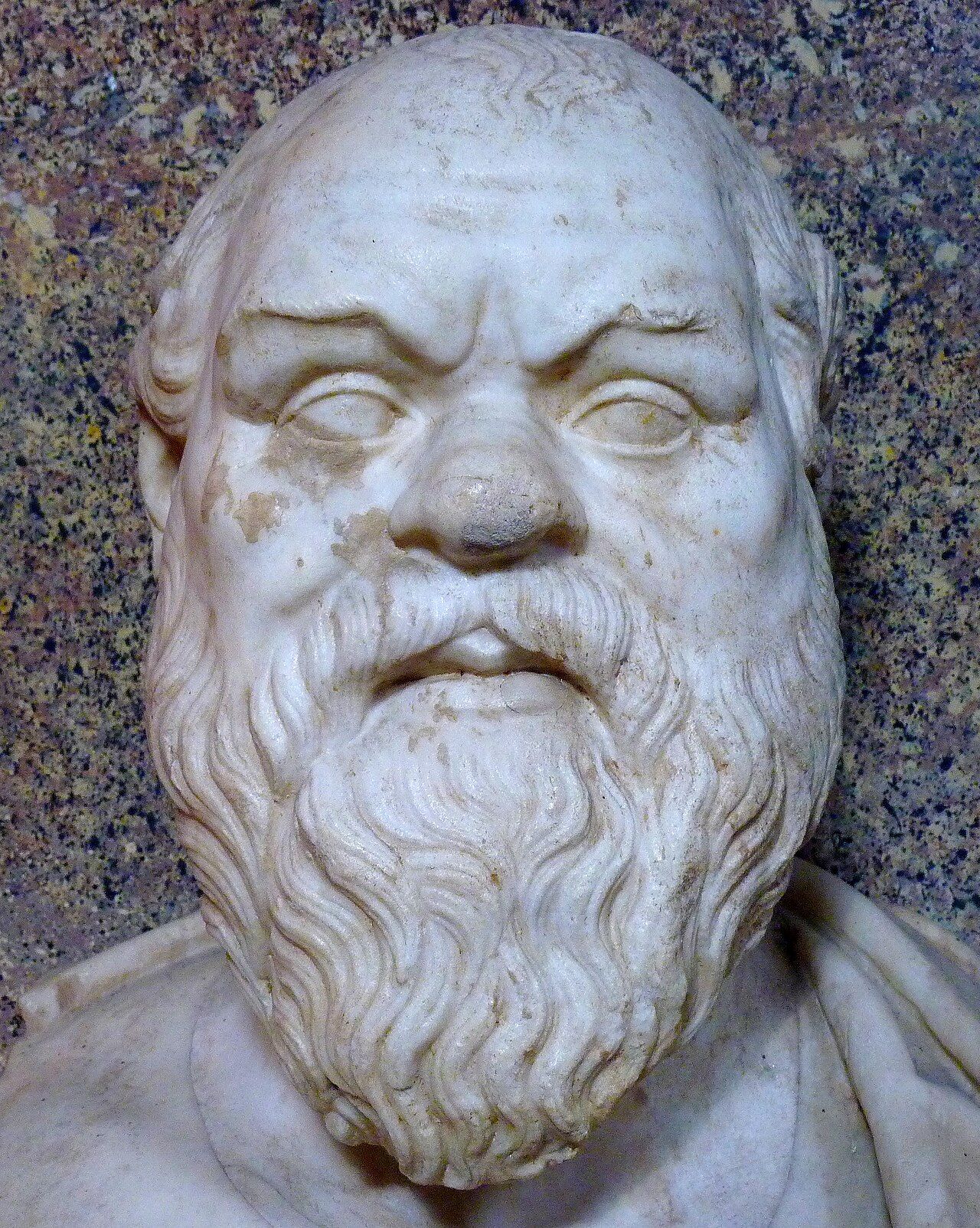
Σωκράτης
c. 470 – 399 BC
Marble bust of Socrates, Vatican Museums. Photo: Dudva · CC BY-SA 4.0 · Wikimedia Commons
Athenian philosopher who wrote nothing and was executed in 399 BC; the Stoics treated his life and death as the clearest example of a wise man.
Biography · editorial
Socrates spent his life in Athens questioning people about how to live, and left no writings of his own. What we know of him comes mainly from his followers Plato and Xenophon. In 399 BC he was tried for impiety and corrupting the young, found guilty, and put to death by drinking hemlock.
The Stoics claimed him as a forerunner. Several of their central positions are versions of ideas attributed to him: that virtue is a kind of knowledge, that it is the only true good, and that a good person cannot really be harmed. Through Antisthenes and the Cynics, later writers traced a line of descent from Socrates to Zeno.
No figure is invoked more often in Epictetus’ Discourses. Socrates’ calm at his trial and in prison, and his refusal to treat death or exile as evils, are held up again and again as the standard a student should aim for.
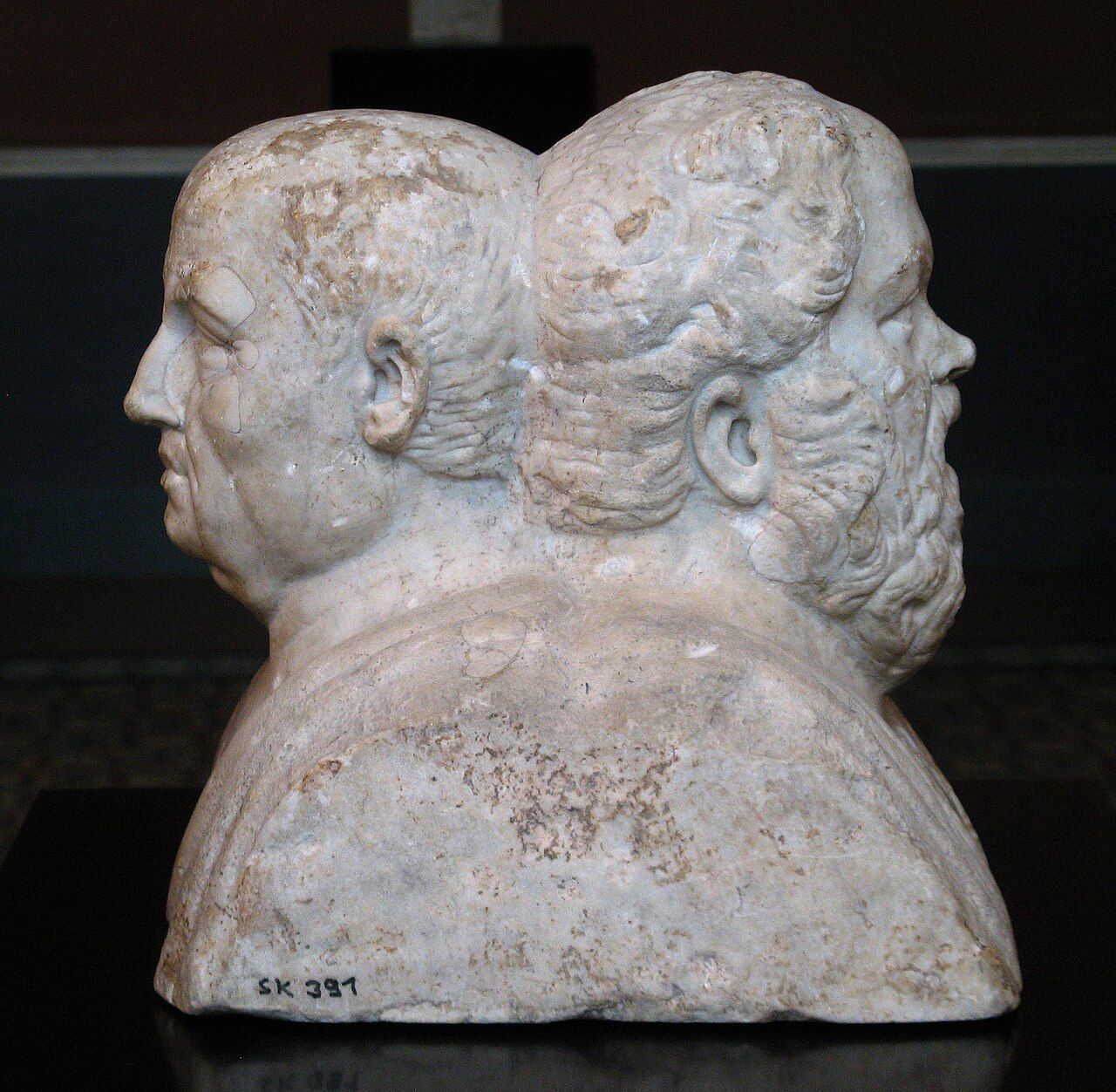
In art and archaeology
Passages that mention Socrates
126 passages in 20 works, found by name in the English translations. This is a first-pass index: a few matches may be namesakes.
Discourses · 37
- Discourses 1.2 — …it for a Trifle. Greatness indeed, and Excellence, perhaps belong to others, to such as Socrates. Why then, as we are born with a like Nature, do not all, or the greater Number become…
- Discourses 1.4 — …what Exile, what Prison, what Poison is: That he may be able to say in a Prison, like Socrates, "My dear Crito; if it thus pleases the Gods, thus let it be;" and not——"Wretched old…
- Discourses 1.9 — …say of the Kindred between God and Man be true; what has any one to do, but, like Socrates, when he is asked what Countryman he is, never to say that he is a Citizen of Athens, or…
- Discourses 1.12 — …both in Heaven and Earth; but only in general, not Individuals: a fifth like Ulysses and Socrates: O Thou, who, ever present in my Way, Dost all my Motions, all my Toils survey. Pope's…
Show 33 more
- Discourses 1.17 — …written, That the Beginning of a right Education is the Examination of Words? Doth not Socrates say it? Of whom, then, doth Xenophon write, That he began by the Examination of Words;…
- Discourses 1.19 — …Show that. Who would wish to be like You? Who would desire to imitate You, as he would Socrates?——"But I can take off your Head?"——"You say right. I had forgot, that one is to pay…
- Discourses 1.25 — …an Affront upon you."——"Much Good may it do you." $. 4. These Things were the Study of Socrates; and, by this means, he always preserved the same Countenance. But we had rather…
- Discourses 1.26 — …to Life, no one offers himself to Conviction; and we hate those who have convinced us. Socrates used to say, that we ought not to live a Life unexamined.
- Discourses 1.29 — …should they? If we were weighed in a Scale, must not the Heavier outweigh? That ever Socrates should suffer such Things from the Athenians! Wretch what do you mean by Socrates?…
- Discourses 2.1 — …and to our Principle concerning it, Carelessness, and Desperateness, and Indifference. Socrates used, very properly, to call these Things Vizards: for, as Masks appear shocking and…
- Discourses 2.2 — …Proof; this your Victory; this your Conclusion; and this and this your Applause. Thus Socrates, to one who put him in mind to prepare himself for his Tryal; "Do not you think, says…
- Discourses 2.5 — …a Third, You have thrown once already. This is a mere Quarrel; not a Play. Therefore Socrates well understood playing at Ball. What do you mean? Using Pleasantry at his Trial.…
- Discourses 2.6 — …mind to keep it equal for both Places, it may be kept. We shall then become Imitators of Socrates, when, even in a Prison, we are able to write Hymns of Praise: but, as we now are,…
- Discourses 2.12 — …it, do not ridicule him; but rather be sensible of your own Incapacity. How then, did Socrates use to act? He obliged his Antagonist himself to bear Testimony to him; and wanted no…
- Discourses 2.13 — …you may thus be laid hold on by the Body, follow every one who is stronger than you. Socrates, indeed, had studied how to speak, who talked in such a manner to Tyrants, and Judges,…
- Discourses 2.16 — …Door of a Philosopher. For what Pretensions have I, to any thing of the same kind with Socrates, who died, and who lived, in such a Manner? Or with Diogenes? Do you observe either of…
- Discourses 2.18 — …of wise and good Men, whether alive or dead; and compare your Conduct with theirs. Go to Socrates, and see him lying by Alcibiades, yet slighting his Youth and Beauty. Consider what a…
- Discourses 2.26 — …he remains where he is: for he doth it on the Appearance, that he acts rightly. Hence Socrates, relying on this Faculty, used to say, "It is not my Custom to cite any other Witness of…
- Discourses 3.1 — …Why is Know Thyself inscribed on the Front of his Temple, when no one minds it? Did Socrates prevail on all who came to him, to take care of themselves? Not on the thousandth Part:…
- Discourses 3.5 — …one, even in Health: so do not lose the doing what you are qualified for. But what says Socrates? "As one Man rejoices in the Improvement of his Estate, another of his Horse, so do I…
- Discourses 3.7 — …and we will pursue it: show us what is against our Interest, and we will avoid it. Like Socrates, make us Imitators of yourself. He was properly a Governor of Men, who subjected their…
- Discourses 3.12 — …Respect. The Third Class relates to Assent, and what is plausible and persuasive. As Socrates said, that we are not to lead an unexamined Life; so neither are we to admit an…
- Discourses 3.14 — …you should ever succeed. Now, Conceit is removed by Confutation: and of this Socrates was the Author. And [in order to see] that the Undertaking is not impracticable,…
- Discourses 3.16 — …and knows how to put the Instrument in Tune? Hath any of you such a Faculty as Socrates had; who, in every Conversation, could bring his Companions to his own Purpose? Whence…
- Discourses 3.18 — …hath pronounced you guilty of Impiety. And did not the Judges pronounce the same of Socrates? Is his pronouncing a Sentence, any Business of yours? No. Then why do you, any longer,…
- Discourses 3.21 — …of Body; and, above all, a Counsel from God to undertake this Office, as he counselled Socrates to undertake the Office of Confutation; Diogenes, that of authoritative Reproof; Zeno,…
- Discourses 3.22 — …if it should so happen, be able to lift up his Voice, come upon the Stage, and say, like Socrates, "O Mortals, whither are you hurrying? What are you about? Why do you tumble up and…
- Discourses 3.23 — …Reason, which, after Examination, appears to me to be the best. Hence, who ever heard Socrates say, "I know, or teach, any thing?" But he sent different People to different…
- Discourses 3.24 — …Practices, and hold their Principles, do you talk to us of the Doctrines of Zeno and Socrates? Why do not you throw away, to as great a Distance as possible, those Ornaments which…
- Discourses 3.26 — …in Health: how Slaves live; how, Labourers; how, those who are genuine Philosophers; how Socrates lived, even with a wife and Children; how, Diogenes; how, Cleanthes, at once studying…
- Discourses 4.1 — …his finest and most splendid Slavery. ———. Not to be a Fool; but to learn what Socrates taught; the Nature of Things: and not to adapt Pre-conceptions rashly to particular…
- Discourses 4.4 — …a Fever, or dread Water, like him who is bit by a mad Dog. Else, how can you say, like Socrates, "If it so pleases God, so let it be?" Do you think that Socrates, if he had fixed his…
- Discourses 4.5 — …quarrels with any one himself, nor, as far as possible, suffers another. The Life of Socrates affords us an Example of this too, as well as of the other [Virtues]; who not only…
- Discourses 4.7 — …receives me graciously; and relate to others, in what Manner he spoke to me? For is He Socrates, or Diogenes, that his Praise should show what I am? Or have I set my Heart on imitating…
- Discourses 4.8 — …where is the Harm of not being found out by so foolish a Judge?" It was thus too that Socrates concealed himself from the Generality: and some even came and desired him to recommend…
- Discourses 4.9 — …and Zeno, you read Aristides and Euenus. Have you lost nothing then? Instead of Socrates and Diogenes, you admire him who can corrupt and entice the most Women. You set out your…
- Discourses 4.11 — …but that which arises from Want of Care, is a Kind of inward Putrefaction.——"But Socrates bathed but seldom."——But his Person looked clean, and was so agreeable and pleasing,…
Moral Letters to Lucilius · 20
- Letters 6.6 — …each his different way, derived more benefit from the character than from the words of Socrates. It was not the class-room of Epicurus, but living together under the same roof, that…
- Letters 7.6 — …must be rescued from the mob; it is too easy to side with the majority. Even Socrates, Cato, and Laelius might have been shaken in their moral strength by a crowd that was…
- Letters 13.14 — …for my best interests; it may be that such a death will shed credit upon my life.” Socrates was ennobled by the hemlock draught. Wrench from Cato’s hand his sword, the vindicator…
- Letters 24.4 — …refused to return when Sulla summoned him,—and nobody in those days said “No” to Sulla! Socrates in prison discoursed, and declined to flee when certain persons gave him the…
Show 16 more
- Letters 28.2 — Socrates made the same remark to one who complained; he said: “Why do you wonder that…
- Letters 28.8 — Says one: “There were thirty tyrants surrounding Socrates, and yet they could not break his spirit”; but what does it matter how many masters a…
- Letters 44.3 — Socrates was no aristocrat. Cleanthes worked at a well and served as a hired man watering a…
- Letters 64.10 — …the highest marks of respect Marcus Cato, the Elder and the Younger, Laelius the Wise, Socrates and Plato, Zeno and Cleanthes? I worship them in very truth, and always rise to do…
- Letters 67.7 — …open by Cato’s own hand, or the exile of Rutilius, or the cup of poison which removed Socrates from gaol to heaven. Accordingly, in praying for a life of honour, I have prayed also…
- Letters 70.9 — Socrates might have ended his life by fasting; he might have died by starvation rather than by…
- Letters 71.7 — Socrates, who recalled the whole of philosophy to rules of conduct, and asserted that the highest…
- Letters 71.16 — …death was no less a good than his honourable life, since virtue admits of no stretching. Socrates used to say that verity and virtue were the same. Just as truth does not grow, so…
- Letters 71.17 — …the lesser goods, you will be including it among the evils also; you will pronounce Socrates unhappy in his prison, Cato unhappy when he reopens his wounds with more courage than he…
- Letters 79.14 — How long did men believe Democritus to be mad! Glory barely came to Socrates. And how long did our state remain in ignorance of Cato! They rejected him, and did not…
- Letters 98.12 — …trials have been overcome by many: fire by Mucius, crucifixion by Regulus, poison by Socrates, exile by Rutilius, and a sword-inflicted death by Cato; therefore, let us also overcome…
- Letters 104.7 — …and hunting for leisure, will find something to distract his mind in every place. Socrates is reported to have replied, when a certain person complained of having received no…
- Letters 104.21 — …Laelius, with Tubero. Or, if you enjoy living with Greeks also, spend your time with Socrates and with Zeno: the former will show you how to die if it be necessary; the latter how to…
- Letters 104.27 — If, however, you desire a pattern, take Socrates, a long-suffering old man, who was sea-tossed amid every hardship and yet was…
- Letters 104.28 — …Next came the prison, and the cup of poison. But all these measures changed the soul of Socrates so little that they did not even change his features. What wonderful and rare…
- Letters 104.29 — …regime which was soon to breed civil war. And you may say that he, just as much as Socrates, declared allegiance to liberty in the midst of slavery—unless perchance you think that…
Lives of Eminent Philosophers, Book VII · 11
- Lives 7.2 — …second book of Xenophon’s Memorabilia, he was so pleased that he inquired where men like Socrates were to be found.
- Lives 7.26 — …and little, and nevertheless it is no little thing itself. [Others attribute this to Socrates.]
- Lives 7.31 — …father, Mnaseas, being a merchant often went to Athens and brought away many books about Socrates for Zeno while still a boy.
- Lives 7.32 — …a definition of the end. They say that he was in the habit of swearing by capers just as Socrates used to swear by the dog. Some there are, and among them Cassius the Sceptic and his…
Show 7 more
- Lives 7.53 — …things; by resemblance notions whose origin is something before us, as the notion of Socrates which we get from his bust; while under notions derived from analogy come those which we…
- Lives 7.58 — …name is a part of speech expressing a quality peculiar to an individual, e.g. Diogenes, Socrates. A verb is, according to Diogenes, a part of speech signifying an isolated predicate,…
- Lives 7.61 — …particular species is that which, being itself a species, has no species below it, e.g. Socrates. Division of a genus means dissection of it into its proximate species, thus: Animals…
- Lives 7.63 — …Who? Whereas in those that are complete in themselves the enunciation is finished, as Socrates writes. And so under the head of defective expressions are ranged all predicates, while…
- Lives 7.91 — …in the first book of his treatise on Ethics, that virtue really exists is the fact that Socrates, Diogenes, and Antisthenes and their followers made moral progress. And for the…
- Lives 7.165 — …and objects, as the same bronze might become a statue either of Alexander or of Socrates. He made a distinction between end-in-chief and subordinate end: even the unwise may aim…
- Lives 7.178 — …the Passions, two books. Of Kingship. Of the Spartan Constitution. Of Lycurgus and Socrates, three books. Of Law. On Divination. Dialogues on Love. Of the School of Eretria. Of…
Meditations · 11
- Meditations 1.16 — …calmly, methodically, manfully, consistently. One might apply to him what is told of Socrates, that he was able to abstain from or enjoy those things that many are not strong enough…
- Meditations 3.3 — …beplastered with cowdung. And lice caused the death of Democritus, and other vermin of Socrates. What of this? Thou hast gone aboard, thou hast set sail, thou hast touched land; go…
- Meditations 3.6 — …to itself all individual desires, which scrutinizes the thoughts, and, in the words of Socrates, has withdrawn itself from all the enticements of the senses, and brought itself into…
- Meditations 6.47 — …so many wonderful orators have gone, so many grave philosophers, Heraclitus, Pythagoras, Socrates: so many heroes of old time, and so many warriors, so many tyrants of later days: and…
Show 7 more
- Meditations 7.19 — …and activity, as our members are with one another. How many a Chrysippus, how many a Socrates, how many an Epictetus hath Time already devoured! Whatsoever man thou hast to do with…
- Meditations 7.66 — How do we know that Telauges may not have excelled Socrates in character? For it is not enough that Socrates died a more glorious death, and…
- Meditations 8.3 — What are Alexander and Gaius and Pompeius to Diogenes and Heraclitus and Socrates? For these latter had their eyes opened to things and to the causes and the material…
- Meditations 11.23 — Socrates used to nickname the opinions of the multitude Ghouls, bogies to terrify children.
- Meditations 11.25 — Socrates refused the invitation of Perdiccas to his court, That I come not, said he, to a…
- Meditations 11.28 — Think of Socrates with the sheepskin wrapped round him, when Xanthippe had gone off with his coat, and…
- Meditations 11.39 — Socrates was wont to say: What would ye have? The souls of reasoning or unreasoning creatures? Of…
On Duties · 8
- De Officiis 1.2 — …different from that of the Peripatetics (for both they and I claim to be followers of Socrates and Plato). As to the conclusions you may reach, I leave that to your own judgment (for…
- De Officiis 1.90 — …of countenance in every condition of life; this, history tells us, was characteristic of Socrates and no less of Gaius Laelius. Philip, king of Macedon, I observe, however surpassed by…
- De Officiis 1.108 — …more serious ideals and lived a more austere life. Among the Greeks, history tells us, Socrates was fascinating and witty, a genial conversationalist; he was what the Greeks call…
- De Officiis 1.148 — …are in themselves rules; and no one ought to make the mistake of supposing that, because Socrates or Aristippus did or said something contrary to the manners and established customs of…
Show 4 more
- De Officiis 2.43 — And yet, as Socrates used to express it so admirably, the nearest way to glory—a short cut, as it were—is to…
- De Officiis 2.87 — …to save it and increase it by care and thrift. These principles Xenophon, a pupil of Socrates, has set forth most happily in his book entitled Oeconomicus. When I was about your…
- De Officiis 3.11 — …question that expediency can never conflict with moral rectitude. And so, we have heard, Socrates used to pronounce a curse upon those who first drew a conceptual distinction between…
- De Officiis 3.77 — …qualities without number. To this type of good man, then, known not only to a Socrates but even to a Fimbria, nothing can possibly seem expedient that is not morally right.…
On Benefits · 8
- On Benefits 1.8 — As the pupils of Socrates, each in proportion to his means, gave him large presents, Aeschines, a poor pupil,…
- On Benefits 1.9 — …himself his own price. By a stroke of genius this youth discovered a means of presenting Socrates to himself. We must not consider how great presents are, but in what spirit they are…
- On Benefits 3.32 — …anyone have heard of Aristo and Gryllus except through Xenophon and Plato, their sons? Socrates keeps alive the memory of Sophroniscus. It would take long to recount the other men…
- On Benefits 5.4 — …fortune herself could bestow nothing. I must be worsted in a contest of benefits with Socrates, or with Diogenes, who walked naked through the treasures of Macedonia, treading the…
Show 4 more
- On Benefits 5.6 — …gave him an empire reaching from a corner of Thrace to the shore of the unknown sea. Socrates could make the same boast, and so could Diogenes, by whom Alexander was…
- On Benefits 5.7 — …own mind and keep it under one's own control. Plato, it is argued, was grateful to Socrates for having been taught by him; why should not Socrates be grateful to himself for having…
- On Benefits 7.8 — …from that possession of everything of which you speak. I will not remind you of Socrates, Chrysippus, Zeno, and other great men, all the greater, however, because envy prevents…
- On Benefits 7.24 — Socrates once said in the hearing of his friends: "I would have bought a cloak, if I had had the…
Enchiridion · 5
- Enchiridion 5 — …they take of things. Thus death is nothing terrible, else it would have appeared so to Socrates. But the terror consists in our notion of death, that it is terrible. When, therefore,…
- Enchiridion 32 — …have assumed, and whose advice you will neglect, if you disobey. Come to divination, as Socrates prescribed, in cases of which the whole consideration relates to the event, and in which…
- Enchiridion 33 — …with any one, and especially with one who seems your superior, represent to yourself how Socrates or Zeno would behave in such a case, and you will not be at a loss to meet properly…
- Enchiridion 46 — …do not discourse how people ought to eat; but eat as you ought. For remember that thus Socrates also universally avoided all ostentation. And when persons came to him, and desired to…
Show 1 more
- Enchiridion 51 — …nor can it be put off; and that by one failure and defeat honor may be lost—or won. Thus Socrates became perfect, improving himself by everything, following reason alone. And though you…
On Anger · 4
- On Anger 1.15 — …to work reformation if the sentence be pronounced with deliberate judgment. This is why Socrates said to the slave, "I would strike you, were I not angry." He put off the correction of…
- On Anger 2.7 — …than that his passions should depend upon the wickedness of others? If so, the great Socrates will no longer be able to return home with the same expression of countenance with which…
- On Anger 3.11 — …ways in which anger may be checked; most things may be turned into jest. It is said that Socrates when he was given a box on the ear, merely said that it was a pity a man could not tell…
- On Anger 3.13 — …slower. Our inward thoughts gradually become influenced by our outward demeanour. With Socrates it was a sign of anger when he lowered his voice, and became sparing of speech; it was…
On Peace of Mind · 4
- On Peace of Mind 5 — …the unhappy state obtain all the Harmodiuses it would need to slay so many tyrants? Yet Socrates was in the midst of the city, and consoled its mourning Fathers, encouraged those who…
- On Peace of Mind 7 — …good man from among the Platos and Xenophons and the rest of the produce of the brood of Socrates, or if you had been permitted to choose one from the age of Cato: an age which bore many…
- On Peace of Mind 16 — …with good cause to make one sad and anxious: I mean when good men come to bad ends; when Socrates is forced to die in prison, Rutilius to live in exile, Pompeius and Cicero to offer…
- On Peace of Mind 17 — …the mind strained to the same pitch, but it ought sometimes to be relaxed by amusement. Socrates did not blush to play with little boys, Cato used to refresh his mind with wine after he…
Fragments · 3
- Epictetus, Fragment 133 — …richest of the Athenians Themistocles, the son of Neocles, was better than Aristides and Socrates, though he was poor in virtue. But the wealth of Themistocles and Themistocles himself…
- Epictetus, Fragment 173 — Xanthippe was blaming Socrates, because he was making small preparation for receiving his friends: but Socrates said,…
- Epictetus, Fragment 174 — When Archelaus was sending for Socrates to make him rich, Socrates told the messengers to return this answer: At Athens four…
On the Happy Life · 3
- On the Happy Life 25 — …all this? it is that I prefer to have to regulate joys than to stifle sorrows. The great Socrates would say the same thing to you. "Make me," he would say, "the conqueror of all nations:…
- On the Happy Life 26 — …is his: for he lives happy in the present, and without fear for the future. The great Socrates, or anyone else who had the same superiority to and power to withstand the things of…
- On the Happy Life 27 — …by entering he cleansed from shame and rendered more honourable than any senate house, Socrates addresses you, saying: “What is this madness of yours? what is this disposition, at war…
Against the Stoics on Common Conceptions · 2
- Plutarch, On Common Conceptions 13 — …there must have been some conjunction of the wickedness of Meletus with the justice of Socrates, and the dissolute demeanor of Cleon with the probity of Pericles? And could not Jupiter…
- Plutarch, On Common Conceptions 42 — …but he who lives has something of the present still remaining for the future, to say Socrates shall live will never be false so long as it shall be true to say Socrates lives; and so…
On the Firmness of the Wise Man · 2
- On the Firmness of the Wise Man 7 — …I need not remind you that no one save the wise man is good. "If," says our adversary, "Socrates was unjustly condemned, he received an injury." At this point it is needful for us to…
- On the Firmness of the Wise Man 18 — …look at the examples of those men whose endurance we admire, as, for instance, that of Socrates, who took in good part the published and acted jibes of the comedians upon himself, and…
On Stoic Self-Contradictions · 2
- Plutarch, On Stoic Self-Contradictions 24 — …Aristotle, and those who came after them, even to Polemon and Straton, but especially Socrates, diligently studied dialectics, and having cried out that one would even choose to err…
- Plutarch, On Stoic Self-Contradictions 37 — …is to compare such accidents befalling honest and good men, as were the condemnation of Socrates, the burning of Pythagoras, whilst he was yet living, by the Cyloneans, the putting to…
Attic Nights (selection) · 1
- Gellius, Attic Nights 19.1 — …to be told the reason for it. But, if you please, the famous Aristippus, the pupil of Socrates, shall answer for me, who on being asked on a similar occasion by a man much like you…
Life of Cato the Younger · 1
- Plutarch, Cato Minor 46 — …and ardent disciple of his, just as Apollodorus of Phalerum is said to have been of Socrates in olden time. Favonius was impulsive, and easily moved by argument, which did not…
Consolation to Helvia · 1
- Consolation to Helvia 13 — …can be wrought upon by disgrace? A disgraceful death is worse even than disgrace: yet Socrates bore the same expression of countenance with which he had rebuked thirty tyrants, when…
Consolation to Marcia · 1
- Consolation to Marcia 22 — …exile; your son was not more innocent than Rutilius: imprisonment; he was not wiser than Socrates: the piercing of one's breast by a self-inflicted wound; he was not of holier life than…
On Leisure · 1
- On Leisure 8 — …to what state should the wise man betake himself; to that of the Athenians, in which Socrates is condemned to death, and from which Aristotle goes into exile lest he should be…
On Providence · 1
- On Providence 3 — …She tried Mucius by fire, Fabricius by poverty, Rutilius by exile, Regulus by torture, Socrates by poison, Cato by death: it is ill fortune alone that discovers these glorious…